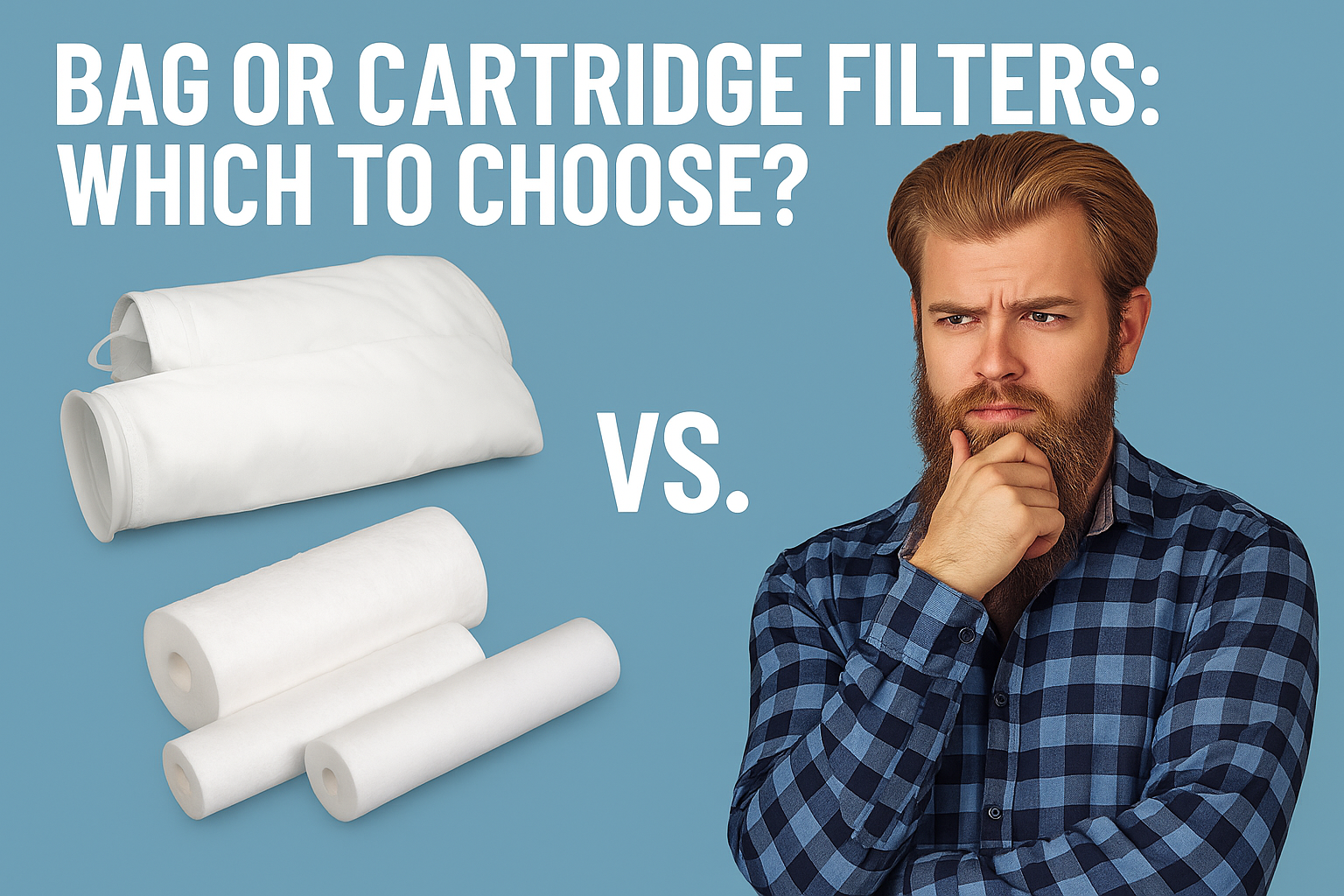
Bag or Cartridge Filters: Which Is Right for Your Liquid Process?
By Total Filtration Services
Choosing the right filtration solution isn’t always black and white—especially when it comes to liquid process filtration. Bag filters and cartridge filters are two of the most widely used options across manufacturing, but each serves distinct purposes depending on your flow rates, contamination levels, and quality requirements.
Let’s break it down.
Feature
Bag Filters
Cartridge Filters
Filtration Efficiency
Moderate
High
Dirt-Holding Capacity
Very High
Moderate
Change-Out Frequency
Lower
Higher (depending on use)
Pressure Drop
Lower
Slightly higher (initially)
Micron Ratings
1 to 200+
0.2 to 100+
Bag filters operate on a depth filtration principle and are ideal for handling higher volumes of contaminants. Cartridge filters, on the other hand, are designed for finer filtration, often required in sensitive or high-purity processes.
When to Consider Bag Filters
Bag filters shine in:
High-flow applications where throughput matters
Processes with high solids load, like metalworking fluids or wastewater
Budget-conscious operations needing lower replacement frequency
They’re often used in paint lines, cooling tower filtration, and industrial wash processes.
When to Consider Cartridge Filters
Cartridge filters are your go-to for:
Tight particulate control, especially submicron needs
Chemical compatibility with solvents or aggressive fluids
Applications requiring clarity, like food & beverage or pharmaceutical processes
They’re especially beneficial when you can’t afford contamination risks—even in trace amounts.
How to Decide
Start by asking:
What’s your flow rate? Bag filters typically handle more volume.
How critical is filtration to your end product? If precision is key, cartridges are likely the better choice.
Are you in a regulated environment? Cartridges often offer validated performance for audit compliance.
How often do you want to change filters? Bag filters usually have a longer lifespan before clogging.
Still Not Sure? Let’s Talk.
Both filter types have their place—and sometimes, they’re used together for staged filtration. At Total Filtration Services, we help you match your filtration system to your process, your budget, and your performance standards.
Contact us today to review your current setup or explore your options.
.png)