Preventative Intake Screens: Protecting HVAC and Industrial Systems at the Source
By Total Filtration Services
Airborne debris does not need to be large to cause operational problems.
Whether in outdoor rooftop environments or controlled indoor facilities, particulate matter can enter HVAC and industrial air systems through exposed intake points. Over time, this debris can accumulate on coils, clog internal components, restrict airflow, and increase strain on mechanical systems.
Preventative intake screens are designed to capture debris before it enters the system. By installing protective screens at intake points, facilities can reduce contamination exposure and support more consistent equipment performance.
This article explores how preventative intake screens function, where they are commonly applied, and how they support broader filtration and maintenance strategies across a range of environments.
What Are Preventative Intake Screens?
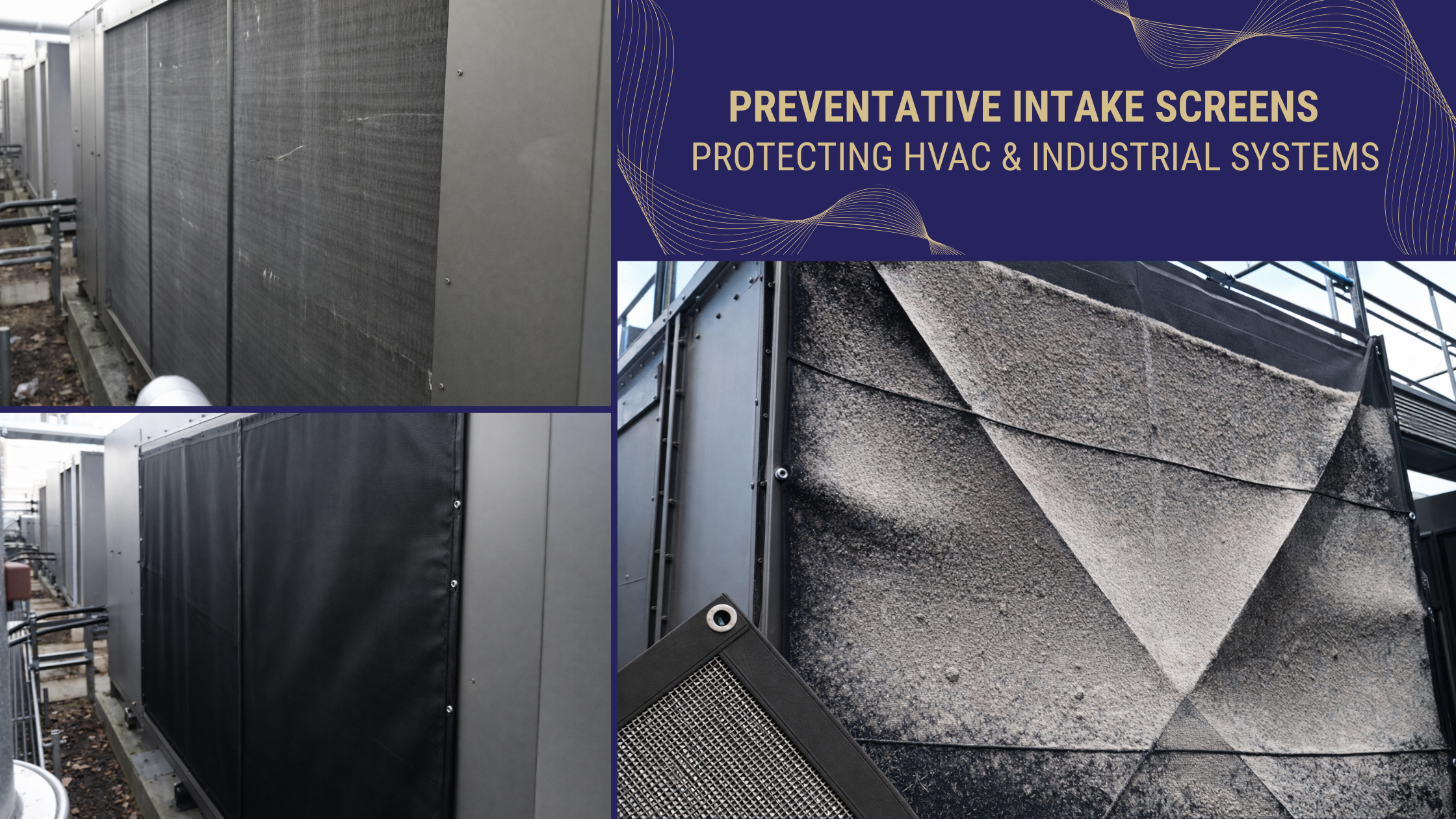
Preventative intake screens are protective barriers installed over air intake openings to stop airborne debris from entering mechanical systems.
Unlike internal filters, which manage fine particulate matter once air has entered the system, intake screens act as an upstream defense — intercepting larger contaminants before they reach coils, filters, fans, or internal components.
They are commonly used in both indoor and outdoor applications, including:
Rooftop HVAC units
Cooling towers and chillers
Make-up air systems
Warehouse ventilation systems
Manufacturing air intake systems
Equipment rooms with exposed intake pathways
By capturing debris at the entry point, preventative intake screens help reduce internal contamination and maintenance demands.
Indoor and Outdoor Applications
While often associated with rooftop units, preventative intake screens are equally valuable in indoor industrial environments.
Outdoor Applications
Outdoor systems are exposed to:
Leaves
Insects
Dust
Pollen
Construction debris
Intake screens help reduce the frequency of coil fouling and downstream filter loading.
Indoor Applications
Indoor environments can introduce:
Packaging fibers
Dust from production processes
Agricultural particulates
Textile lint
Paper fibers
General warehouse debris
When this material is drawn into intake systems, it can accumulate on coils or obstruct airflow pathways. Intake screens help limit that exposure, particularly in facilities with high airborne particulate levels.
How Airborne Debris Impacts System Performance
Unfiltered debris entering intake systems can contribute to:
Restricted airflow
Increased static pressure
Reduced heat transfer efficiency
Higher energy demand
Premature filter loading
More frequent maintenance intervals
Because buildup often occurs gradually, performance degradation may not be immediately noticeable. Over time, however, airflow restriction can impact system reliability and operating cost.
Preventative intake screens help reduce this risk by limiting debris ingestion at the source.
Operational Benefits of Preventative Intake Screens
Facilities implementing intake protection often report improvements in:
Reduced Internal Contamination
Stopping debris externally helps protect coils and internal components.
Improved Maintenance Predictability
With less contamination entering the system, maintenance cycles become more consistent and easier to plan.
Extended Equipment Performance
Maintaining cleaner intake pathways helps reduce strain on fans, compressors, and motors.
Support for Cleanliness Standards
In certain industries, minimizing airborne contamination supports quality control and operational standards.
Preventative intake screens do not replace internal filtration — they complement it by strengthening upstream protection.
When Should Facilities Consider Preventative Intake Screens?
Spring and early summer are the most common seasons for intake debris accumulation. Facilities located near the following may experience higher seasonal buildup:
Trees or heavy vegetation
Agricultural operations
Construction zones
High pollen regions
However, intake protection should not be limited to reactive scenarios. Evaluating vulnerability before peak cooling demand allows maintenance teams to plan proactively.
An assessment of the following can help determine if preventative intake screens are appropriate:
Intake exposure
Historical coil cleaning frequency
Seasonal debris patterns
Energy performance trends
Preventative Intake Screens as Part of a Broader Filtration Strategy
Intake protection should be viewed as one component of a comprehensive filtration approach.
At Total Filtration Services, we work with facilities to evaluate:
Equipment vulnerability
Environmental exposure
Maintenance frequency
Operational impact
Preventative intake screens may be one solution among many, depending on system design and performance goals.
For examples of how facilities have implemented intake protection and improved operational efficiency, explore our related case studies by industry:
.png)