Liquid Cartridge Solution Improves Safety and Provides Cost Savings over $300,000
Total Filtration Services
The customer involved in this case study manufactures and markets acetate fibers, plastics and chemicals used to produce films and other products. They are a global company with over 50 manufacturing locations and nearly 15,000 employees. The manufacturing facility discussed resides in the southern region of the United States.
Challenge
The customer’s dedicated TFS Account Manager approached the operations team to inquire about the change-out frequency of the liquid cartridge filters for their process stream and were used to removing particulate and coalesce water from the product(s) being manufactured.
The customer was replacing a total of 62 liquid cartridge filters across 2 large housings every 5 to 7 days, which was costing them about $7500 of material costs per change out. It was estimated that the customer was consuming about 3800 of these liquid cartridge filters per year at an annual cost of $247,000. This projected amount doesn’t account for the expedited delivery of these filters, which occurred frequently and is an additional expense.
In addition to the material costs, labor allocation was also a concern, as the filter replacement service work for this application took 18 manhours to complete. This was largely due to the time needed for the process stream to cool down from 400°F before the housings could be opened, and filters could be safely removed.
Workplace safety was the most significant concern for the customer. Employees were required to work from an overhead suite and reach down into the housings. The process also required employees to obtain a “Hot Work” permit as the environment was very hot, especially during the summer months.
The TFS Solution
When asked why the cartridge filters were being changed so frequently, the customer indicated the process was normal for them. It was what they had always done and weren’t aware of a better way to handle the filtration for that application.
Upon inspection of the cartridges that were pulled from the housing during a recent changeout, it was discovered the filters were not spent. However, they required replacements due to damage caused by the highly caustic, and hot, process they were exposed to. The filter media was exposed and blown apart. This was a key indicator of the material not being the best choice for this application.
The customer was aware of the damaged filters and considered it to be normal due to the caustic process. However, TFS was dedicated to lowering the customer’s total cost of ownership and proposed an engineered filtration solution that would truly meet their needs. The customer’s engineering team was agreeable to testing a batch of new cartridges, understanding the potential cost savings gained by extended filter life would far outweigh the increased cost per filter.
TFS reached out to one of their trusted manufacturing partners, Peco Filters (manufactured by Parker’s Industrial Process Filtration Division) to evaluate the existing filter design and engineer a new filtration solution.
Upon discussion of the application and evaluation of the original cartridge, it was determined that the filter media was being subjected to the very top end of the process temperature for the life of this filter. The new filter design would require an outside support structure and media that would be more tolerant of the process fluid and temperatures.
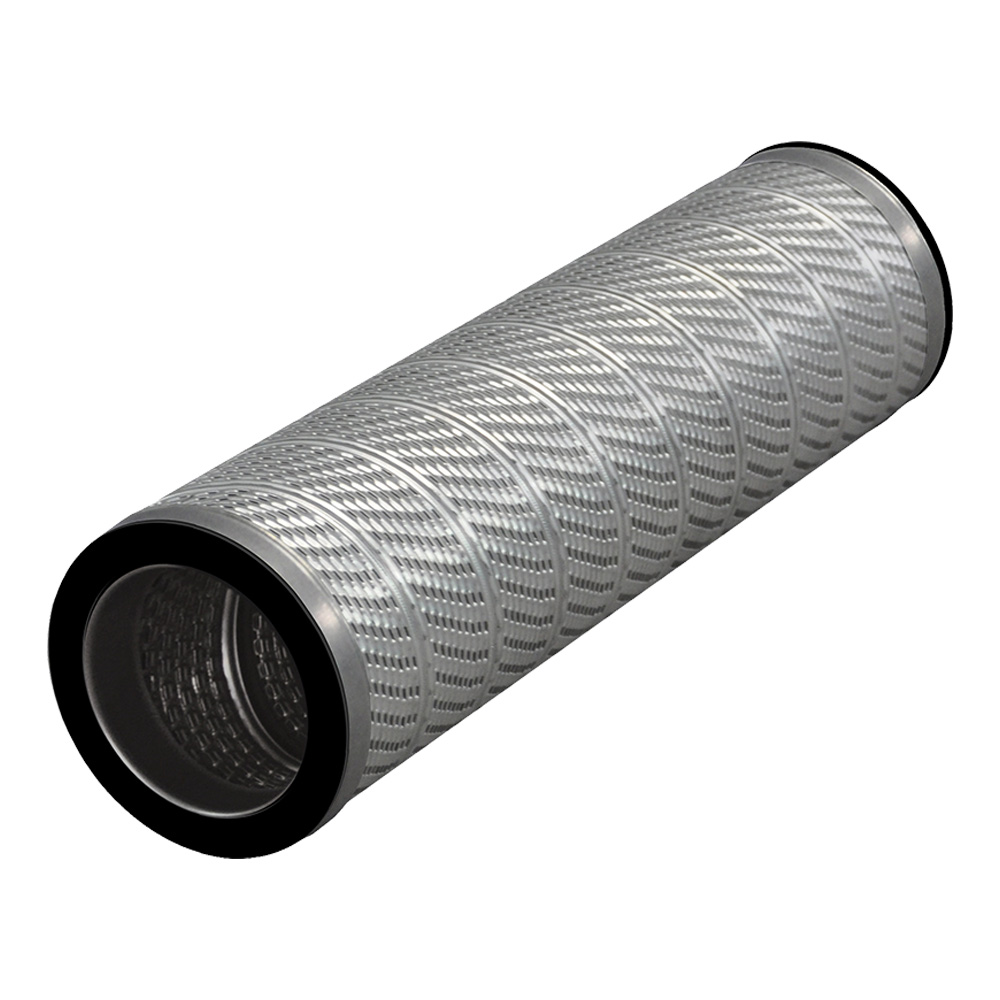
In a short period of time, Peco Filters engineered a much-improved design that included an outer support tin wrap on the outside of the filter cartridge and a new product called “Hot Peach Media” that would tolerate the temperatures of the process.
TFS explained the new design to the customer’s reliability engineer who then studied the components and design and was agreeable to a proposal for a trial run. This included ordering a complete set of 62 filters for evaluation, with the expectation they would last approximately 5 weeks.
During the evaluation period, the process filtrate was monitored 24 hours per day, 7 days per week for particulate contamination and the presence of water.
Parker IPF HotPeach
Results
During the first 5 weeks of the trial, process filtrate quality did not show any adverse conditions or signs of needing to change the filters. The decision was made to continue running the test filters until such a time that the samples of the filtrate indicated the filters needed replacement.
Over a 19-month period, the test filters ran continually until the customer decided to change them during a scheduled shutdown for other maintenance activities.
As a result of the success of the trial, the customer gave credit to TFS for a hard cost savings of over $250,000! They also acknowledged an annual soft cost-savings of $50,000, as the new filtration solution significantly reduced interruptions to their process, improved labor efficiency, and increased productivity.
Most importantly, employee safety improved by not exposing employees to the harsh conditions of changing the filters every 5 to 7 days.
Need help solving a tricky filtration issue?
Whether it’s air, liquid, or process filtration, we’re here to help you find the right solution.
.png)